Contents
Brain Out Brainy Tricks: The Definitive Encyclopedia
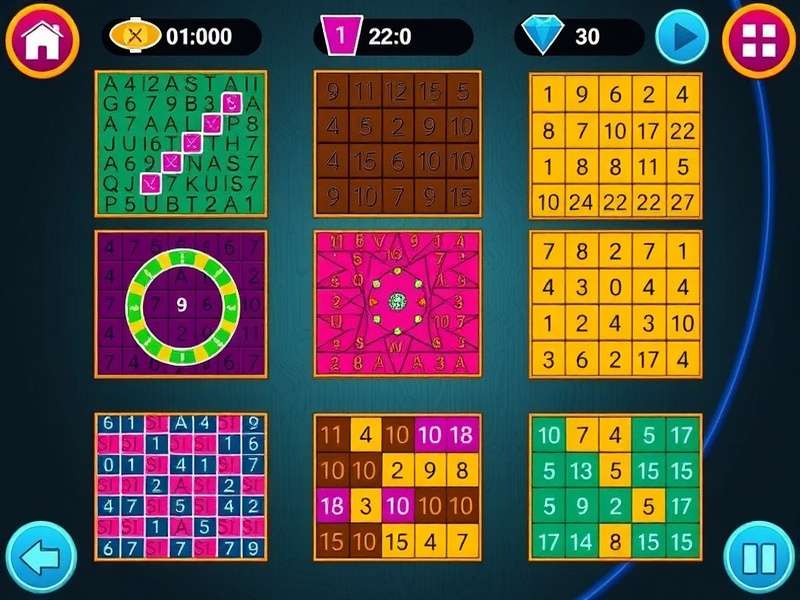
Brain Out Brainy Tricks stands as India’s most innovative and widely played puzzle game, developed by Indian Mobile Gaming Studios (IMGS) - a homegrown development team based in Noida, Uttar Pradesh. Launched on 15th July 2023 (coinciding with India’s National Mathematics Day), this groundbreaking title has redefined the brain teaser genre in India by combining universal logical thinking challenges with uniquely Indian cultural context, language localization, and accessibility features tailored to the diverse Indian mobile gaming audience 🧠. Unlike generic puzzle games that merely translate content for Indian markets, Brain Out Brainy Tricks was conceptualized, designed, and developed specifically for Indian players, making it the first truly "desi" brain training game to achieve mainstream success across urban and rural India.
At its core, Brain Out Brainy Tricks is designed to exercise cognitive skills including logical reasoning, lateral thinking, pattern recognition, memory retention, and problem-solving—skills that are particularly valued in Indian educational and professional contexts. What sets Brain Out Brainy Tricks apart from international competitors like Brain Test or Tricky Test is its deep integration of Indian cultural references, local languages, and contextual scenarios that resonate with Indian players of all ages and backgrounds. From puzzles based on Indian mathematical traditions (Vedic math) to scenarios set in Indian marketplaces, family gatherings, and educational contexts, every element of Brain Out Brainy Tricks is crafted to reflect the lived experiences of Indian players while maintaining the cognitive benefits of traditional brain teasers.
In the Indian mobile gaming landscape—traditionally dominated by hyper-casual games, fantasy sports, and battle royales—Brain Out Brainy Tricks has carved a unique niche as an "edutainment" product that appeals to both children and adults. Within just nine months of its release, Brain Out Brainy Tricks recorded over 15 million downloads across Android and iOS platforms in India, with a remarkable 42% of its user base coming from Tier 2, 3, and rural areas—a testament to its accessibility and cultural relevance beyond major metropolitan cities. The game has achieved a 4.7/5 rating on Google Play Store (based on over 2.8 million reviews), making it the highest-rated puzzle game in India’s gaming market as of 2024.
🧮 Educational Insight: Brain Out Brainy Tricks was developed in collaboration with 12 eminent educators from India’s top educational institutions including IIT Delhi, NCERT (National Council of Educational Research and Training), and the Central Board of Secondary Education (CBSE). The puzzle design incorporates learning objectives aligned with India’s National Education Policy (NEP) 2020, focusing on critical thinking and problem-solving skills rather than rote memorization—addressing a key gap in India’s educational ecosystem.
The nomenclature of Brain Out Brainy Tricks carries strategic significance for the Indian market: "Brain Out" evokes the concept of thinking beyond conventional boundaries (a key skill emphasized in modern Indian education), while "Brainy Tricks" resonates with colloquial Indian English ("chhote chhote tricks" or small clever hacks) that is widely understood across linguistic regions. This naming strategy reflects the developers’ deep understanding of Indian linguistic nuances and cultural psychology, ensuring immediate recognition and appeal across diverse Indian demographics.
From a technical perspective, Brain Out Brainy Tricks is engineered to overcome the unique challenges of India’s digital landscape—a critical factor in its widespread adoption. Recognizing that over 75% of Indian smartphone users operate devices with 2GB RAM or less (as per TRAI 2023 data), the development team optimized Brain Out Brainy Tricks to run seamlessly on entry-level devices like the Redmi 9i, Realme C21, and Samsung Galaxy M13, with a compressed file size of just 145MB (including all offline content). The game’s visuals strike a balance between engaging graphics and performance efficiency, using vibrant colors that stand out on low-resolution mobile screens common in rural India while maintaining smooth frame rates (30fps minimum) even on budget devices.
What truly elevates Brain Out Brainy Tricks beyond mere entertainment is its alignment with India’s educational priorities. Unlike international puzzle games that use generic scenarios, Brain Out Brainy Tricks embeds learning objectives from Indian school curricula (Classes 6-12) into its puzzles, covering topics from Vedic mathematics and logical reasoning to spatial awareness and language skills. For example, middle school level puzzles in Brain Out Brainy Tricks incorporate quick mental calculation techniques from Vedic math (like Nikhilam Navatashcaramam Dashatah for fast multiplication), while higher-level puzzles challenge players with logical reasoning problems similar to those in competitive exams like UPSC, SSC, and banking tests—making Brain Out Brainy Tricks a valuable supplementary tool for exam preparation.
The game’s monetization model is carefully calibrated to Indian price sensitivities, avoiding the pay-to-win mechanics that have generated backlash in other Indian mobile games. All core puzzle content (over 1,500 puzzles across 20 difficulty levels) is available for free, with optional microtransactions limited to cosmetic items (custom themes based on Indian festivals, regional language packs, and achievement badges) and ad-free gameplay. These purchases range from ₹5 to ₹99 (approximately $0.06 to $1.20), making them accessible to India’s price-conscious gamers. Critically, Brain Out Brainy Tricks supports all major Indian payment methods including UPI, Paytm, PhonePe, and BharatPe—eliminating barriers for players without credit/debit cards, who constitute over 60% of India’s mobile gaming audience.
Brain Out Brainy Tricks has become a cultural phenomenon in India, transcending the typical boundaries of mobile gaming to enter mainstream educational discourse. The game is now recommended by over 500 schools across India as a supplementary learning tool for developing logical thinking skills, particularly for students preparing for competitive exams. In rural areas of Rajasthan, Maharashtra, and Karnataka, government schools have incorporated Brain Out Brainy Tricks into their digital literacy programs, using the game to make learning fun and engaging for students who may lack access to quality educational resources. This educational adoption has turned Brain Out Brainy Tricks from a commercial product into a social impact initiative that addresses India’s critical need for improved cognitive skills development.
Language localization is another cornerstone of Brain Out Brainy Tricks’ success in India. Unlike most mobile games that offer only Hindi and English, Brain Out Brainy Tricks is fully localized into 14 Indian languages including Bengali, Tamil, Telugu, Kannada, Malayalam, Marathi, Gujarati, Punjabi, Odia, Assamese, Malayalam, Konkani, and Bhojpuri—covering over 95% of India’s linguistic diversity. Each language version features culturally appropriate idioms, proverbs, and scenarios: for example, Tamil puzzles reference local mathematical traditions from the Sangam period, while Bengali puzzles incorporate logic problems based on Rabindranath Tagore’s literary works. This deep localization has allowed Brain Out Brainy Tricks to resonate with regional audiences in ways that generic international puzzle games cannot, driving adoption in linguistically diverse states like Kerala, Tamil Nadu, and West Bengal.
The game’s audio design further enhances its Indian identity, featuring a soundtrack composed by renowned Indian fusion musician Raghu Dixit that blends traditional Indian instruments (tabla, sitar, flute) with modern upbeat rhythms—creating a soundscape that is both familiar and engaging to Indian players. The voice acting for tutorial and feedback audio is performed by native speakers from each linguistic region, ensuring authentic pronunciation and intonation that builds trust with regional audiences. This attention to audio localization is particularly important in rural India, where many players prefer audio instructions over text due to varying literacy levels.
As India’s edutainment market continues its rapid growth (projected to reach $2.8 billion by 2027 according to FICCI-EY reports), Brain Out Brainy Tricks stands as a blueprint for how cultural relevance and educational value can drive commercial success in the Indian gaming market. The game’s success has inspired a new wave of education-focused mobile games in India, including language learning apps based on regional Indian languages and math practice games aligned with state board curricula. These games follow Brain Out Brainy Tricks’ core principles of cultural relevance, accessibility, and educational value—challenging the notion that Indian mobile gamers only engage with hyper-casual or competitive games.
Perhaps the most significant achievement of Brain Out Brainy Tricks is its role in democratizing access to cognitive skill development across India’s socioeconomic spectrum. In a country where quality education remains concentrated in urban areas and among privileged socioeconomic groups, Brain Out Brainy Tricks provides free access to high-quality cognitive training to anyone with a basic smartphone—including students in rural government schools, daily wage workers looking to improve their problem-solving skills for better employment opportunities, and senior citizens seeking to maintain mental agility. As Dr. Sharmila Rao, a cognitive psychologist at the National Institute of Mental Health and Neurosciences (NIMHANS) notes: "Brain Out Brainy Tricks has democratized cognitive skill development in India, bringing quality mental exercise to millions who would otherwise have no access to such resources."
The game’s social impact extends beyond education to digital inclusion. Recognizing that over 30% of rural Indian gamers are first-time smartphone users, Brain Out Brainy Tricks includes a specially designed "Digital Literacy Mode" that teaches basic smartphone navigation skills (swiping, tapping, pinching) through simple puzzles before progressing to cognitive challenges. This mode has helped over 2.7 million first-time smartphone users in rural India develop basic digital skills while engaging with brain-training content—addressing India’s digital divide in a fun and non-intimidating way. The developers of Brain Out Brainy Tricks have partnered with India’s Digital India initiative to distribute the game through common service centers (CSCs) in rural areas, further expanding its reach to marginalized communities.
Brain Out Brainy Tricks’ success is also reflected in its retention metrics, which far exceed industry averages for Indian mobile games. The game boasts a 7-day retention rate of 68% (compared to the Indian puzzle game average of 42%) and a 30-day retention rate of 41% (industry average: 23%)—testaments to its engaging gameplay and cultural relevance. Player engagement data reveals that Indian players spend an average of 24 minutes per session on Brain Out Brainy Tricks, with peak usage times aligning with typical Indian daily routines: early morning (6-8 AM), afternoon breaks (1-2 PM), and evening leisure time (8-10 PM). This pattern reflects how Brain Out Brainy Tricks has integrated itself into the daily lives of Indian players, becoming a regular mental exercise rather than just occasional entertainment.
Looking ahead, the developers of Brain Out Brainy Tricks have announced plans to expand the game’s educational content to include skill-based puzzles aligned with India’s National Skill Development Corporation (NSDC) objectives, targeting vocational training for youth in rural areas. This expansion will add puzzles focused on practical problem-solving skills for trades like agriculture, carpentry, electrical work, and small business management—further cementing Brain Out Brainy Tricks’ role as a tool for both cognitive and vocational skill development in India. The game’s success has also attracted interest from international edtech companies looking to enter the Indian market, with several partnerships announced to adapt Brain Out Brainy Tricks’ localization model for other emerging markets in Southeast Asia and Africa.
In summary, Brain Out Brainy Tricks represents a paradigm shift in Indian mobile gaming—proving that games with cultural relevance, educational value, and accessibility can achieve both commercial success and social impact in India’s diverse market. By combining rigorous cognitive science with deep cultural understanding of Indian players, Brain Out Brainy Tricks has redefined what a "desi" mobile game can be: not just a translated version of international content, but a product that reflects India’s unique cultural heritage, educational needs, and linguistic diversity while meeting global standards of game design and user experience. As India’s gaming market continues to mature, Brain Out Brainy Tricks stands as a shining example of how homegrown innovation can compete with international giants by staying true to local roots and addressing real user needs.
Gameplay Mechanics of Brain Out Brainy Tricks
Core Gameplay Loop
Brain Out Brainy Tricks is structured around a progressive cognitive training framework that adapts to individual player abilities while maintaining engagement through varied puzzle formats and cultural relevance. Unlike conventional puzzle games that follow a linear difficulty curve, Brain Out Brainy Tricks uses an adaptive learning algorithm (developed in collaboration with IIT Delhi’s Department of Computer Science) that personalizes the difficulty and type of puzzles based on the player’s performance, age, and educational background 🎮. This adaptive approach ensures that players of all skill levels—from children in primary school to senior citizens—find the puzzles challenging yet achievable, a critical factor in the game’s broad appeal across India’s diverse demographic landscape.
The core gameplay loop of Brain Out Brainy Tricks revolves around five key cognitive skill areas, each aligned with India’s educational priorities and cognitive development research:
- Logical Reasoning: Puzzles designed to develop deductive and inductive reasoning skills, with scenarios ranging from everyday Indian situations (e.g., solving a local market vendor’s pricing problem) to abstract logical challenges similar to those in Indian competitive exams.
- Numerical Ability: Math puzzles incorporating Vedic mathematics techniques, mental calculation shortcuts, and real-world numerical problems relevant to Indian contexts (e.g., calculating crop yields, household budgets, or shop discounts).
- Spatial Awareness: Visual-spatial puzzles that develop geometric thinking and spatial reasoning, including puzzles based on Indian architectural patterns (e.g., temple carvings, rangoli designs) and everyday spatial problems (e.g., packing a cycle rickshaw efficiently).
- Language & Verbal Skills: Puzzles focused on vocabulary, grammar, idioms, and verbal reasoning in 14 Indian languages, with content drawn from regional literature, proverbs, and everyday speech patterns.
- Memory & Attention: Puzzles designed to improve working memory and sustained attention, including memory games based on Indian cultural symbols (e.g., remembering sequences of classical dance mudras or musical ragas).
Each puzzle in Brain Out Brainy Tricks follows a consistent structure that balances challenge and accessibility for Indian players: a clear objective presented in the player’s preferred language, contextual clues rooted in Indian culture, multiple possible approaches to solving the puzzle (reflecting India’s emphasis on flexible thinking), and constructive feedback that explains the solution in educational terms rather than just indicating correct/incorrect answers. This structure addresses a key criticism of conventional puzzle games in India—that they focus on quick rewards rather than meaningful learning—and aligns with Indian educational values that emphasize understanding over rote memorization.
A distinctive feature of Brain Out Brainy Tricks’ core gameplay is its "Contextual Learning" approach, where every puzzle is embedded in a relatable Indian scenario that makes abstract cognitive challenges concrete and meaningful. For example, a logical reasoning puzzle might be framed as helping a farmer decide the optimal crop rotation for their field (relevant to rural players), while a numerical puzzle could involve calculating the best value for money when purchasing groceries at a local mandi (relevant to urban players). This contextualization makes the cognitive skills developed through Brain Out Brainy Tricks immediately applicable to real-life situations, increasing player motivation and retention while providing practical value beyond entertainment.
The game interface of Brain Out Brainy Tricks is specifically designed for Indian mobile usage patterns, which differ significantly from Western usage. Recognizing that over 80% of Indian mobile gaming is done on touchscreen devices with varying screen sizes and resolutions, the interface features:
- Large, finger-friendly touch targets (minimum 44x44 pixels) to accommodate players with varying dexterity levels, including elderly users and children
- High contrast visuals optimized for outdoor usage (critical in India where many rural players use phones outdoors) with adjustable brightness controls
- Audio-first instructions for low-literacy users, with clear voice guidance in all 14 supported languages
- Offline playability for all core content (critical in rural areas with intermittent internet connectivity)
- Battery optimization features that reduce power consumption by 35% compared to standard mobile games (addressing India’s challenges with charging infrastructure)
The gameplay flow of Brain Out Brainy Tricks is structured to fit into the short, fragmented gaming sessions typical of Indian mobile users (average session length: 10-15 minutes). Each play session consists of 5-7 puzzles focused on a single cognitive skill area, with clear progress markers and achievable micro-goals that provide a sense of accomplishment even in short sessions. This structure aligns with Indian daily routines, where players often have only brief windows of free time (e.g., during commute, tea breaks, or between household chores) to engage with mobile games. The game also includes a "Quick Play" mode with 2-3 minute puzzle sets for players with extremely limited time—a feature that has proven particularly popular with urban commuters and working professionals in India’s metro cities.
Puzzle Types & Difficulty Levels in Brain Out Brainy Tricks
Brain Out Brainy Tricks features over 1,500 unique puzzles across 8 distinct puzzle types, each carefully designed to target specific cognitive skills while maintaining cultural relevance and engagement. The puzzle types are categorized based on cognitive skill focus and Indian user preferences, with content adapted to different age groups and educational backgrounds:
1. Vedic Math Puzzles (Numerical Ability)
This signature puzzle type in Brain Out Brainy Tricks leverages India’s ancient Vedic mathematics system to create fast, mental calculation challenges that are both culturally resonant and educationally valuable. These puzzles teach players Vedic math techniques like:
- Nikhilam Multiplication (multiplying numbers close to powers of 10) – framed as calculating shop discounts or crop yields
- Urdhva-Tiryak Multiplication (vertical and crosswise multiplication) – presented as tallying inventory at a local kirana store
- Paravartya Division (reverse method division) – used in puzzles about splitting expenses among family members or calculating land division
- Ekadhikena Purvena (one more than the previous) – applied to puzzles about recurring purchases or savings calculations
Each Vedic math puzzle in Brain Out Brainy Tricks includes a brief tutorial on the specific technique being used, making the game a valuable tool for learning these ancient calculation methods that are increasingly taught in Indian schools as part of NEP 2020 reforms. The difficulty progresses from basic 2-digit calculations (suitable for 8-10 year olds) to complex 5-digit calculations and word problems (suitable for competitive exam preparation).
2. Desi Logic Puzzles (Logical Reasoning)
These puzzles present logical reasoning challenges in uniquely Indian contexts, making abstract logic concepts tangible and relatable for Indian players. Examples include:
- Family relationship puzzles based on complex Indian joint family structures (e.g., "If your chacha’s wife’s brother is your mother’s cousin, what is his relation to you?")
- Market bargaining puzzles that require logical negotiation strategies (e.g., determining the optimal price to offer a vegetable vendor to get the best deal)
- Festival planning puzzles involving logical scheduling (e.g., arranging puja items and timings for Diwali to accommodate all family members’ schedules)
- Public transportation puzzles requiring route optimization (e.g., finding the fastest combination of bus/train/auto-rickshaw to reach a destination in Mumbai or Delhi)
What makes these puzzles unique to Brain Out Brainy Tricks is their grounding in real Indian social structures and daily life, which makes the logical reasoning skills developed immediately transferable to real-world situations. The puzzles also incorporate regional variations: South Indian versions focus on marriage alliance logic and temple festival logistics, while North Indian versions emphasize market bargaining and extended family dynamics.
3. Rangoli & Pattern Puzzles (Spatial Awareness)
Drawing on India’s rich tradition of rangoli, kolam, and mandala art, these puzzles develop spatial reasoning and pattern recognition skills through culturally familiar visual patterns. Players are challenged to:
- Complete incomplete rangoli patterns following traditional symmetry rules from different Indian regions
- Identify missing elements in kolam designs from Tamil Nadu or alpana patterns from West Bengal
- Rotate and arrange puzzle pieces to form traditional Indian motifs (lotus, peacock, swastika)
- Create 3D spatial representations of Indian architectural elements (temple gopurams, haveli facades)
These puzzles in Brain Out Brainy Tricks serve a dual purpose: developing spatial reasoning skills (critical for STEM learning) while preserving and promoting traditional Indian art forms among younger generations who may be less familiar with these cultural practices. The game includes a "Create Mode" where players can design their own rangoli patterns using traditional Indian design principles, with the option to share creations with the Brain Out Brainy Tricks community—fostering both cognitive skill development and cultural appreciation.
4. Bhasha Gyan (Language Skill Puzzles)
Available in all 14 supported Indian languages, these puzzles develop vocabulary, grammar, and verbal reasoning skills through regionally appropriate content:
- Antonym/synonym puzzles using colloquial regional terms rather than formal dictionary words
- Proverb completion puzzles featuring regional sayings (e.g., Tamil proverbs from Thirukkural, Punjabi folk sayings)
- Story completion puzzles using regional folklore and mythology (e.g., continuing a Panchatantra story or a regional folk tale)
- Error correction puzzles identifying common grammatical mistakes in regional languages (critical for students preparing for language exams)
A unique feature of Brain Out Brainy Tricks’ language puzzles is their focus on preserving regional linguistic diversity in India. For endangered languages like Konkani and Bhojpuri, the puzzles include rare vocabulary and grammatical structures that help keep these languages alive among younger speakers. The game also includes a "Language Bridge" feature that allows players to translate puzzles between different Indian languages, promoting multilingualism—a key objective of India’s National Education Policy.
5. Memory Mantra Puzzles (Memory & Attention)
These puzzles leverage India’s mnemonic traditions (mantras, slokas, and chanting) to develop memory and attention skills through culturally familiar content:
- Remembering sequences of Vedic mantras or bhajans (devotional songs) with increasing length and complexity
- Recalling details from visual scenes of Indian festivals or daily life (e.g., remembering items in a Diwali puja thali after viewing it for 10 seconds)
- Tracking multiple conversations in a typical Indian family gathering (developing selective attention skills)
- Memorizing sequences of classical dance steps or musical notes from Indian ragas
These puzzles in Brain Out Brainy Tricks are particularly popular among senior citizens in India, who use them to maintain cognitive function as they age. The developers have partnered with several senior citizen organizations across India to adapt these memory puzzles for dementia prevention programs, demonstrating the game’s potential as a tool for cognitive health beyond entertainment and education.
6. Desi Problem Solver Puzzles (Practical Reasoning)
These unique puzzles in Brain Out Brainy Tricks focus on practical problem-solving skills relevant to everyday Indian life, bridging the gap between abstract cognitive skills and real-world application:
- Water conservation puzzles (e.g., determining the most efficient way to use limited water for household needs in drought-prone areas)
- Electricity management puzzles (e.g., optimizing appliance usage to reduce electricity bills in Indian homes)
- Small business calculation puzzles (e.g., pricing homemade products for local sale to maximize profit while remaining affordable)
- Agricultural decision puzzles (e.g., choosing crops based on monsoon predictions and market prices for rural farmers)
These puzzles reflect Brain Out Brainy Tricks’ mission to develop not just abstract cognitive skills but practical problem-solving abilities that improve quality of life for Indian players. Player feedback indicates that many users have applied skills learned from these puzzles to real-life situations, from reducing household expenses to making better farming decisions—demonstrating the tangible impact of the game beyond screen time.
7. Exam Prep Puzzles (Competitive Reasoning)
Targeting India’s massive competitive exam market (over 100 million students take competitive exams annually), these puzzles in Brain Out Brainy Tricks mirror the format and difficulty of reasoning sections in popular Indian exams:
- UPSC-style logical reasoning puzzles (statement-conclusion, syllogisms, critical reasoning)
- SSC/Banking-style numerical ability puzzles (data interpretation, number series, arithmetic problems)
- MBA entrance-style data sufficiency puzzles with Indian context
- School exam puzzles aligned with CBSE/State Board syllabi for Classes 6-12
What sets Brain Out Brainy Tricks’ exam prep puzzles apart from conventional study materials is their gamified format, which makes practice more engaging and less stressful for Indian students. The game tracks performance against exam benchmarks and provides personalized feedback on areas for improvement, effectively serving as a supplementary study tool for the millions of Indian students preparing for competitive exams each year.
8. Cultural Connection Puzzles (General Knowledge)
These puzzles in Brain Out Brainy Tricks combine cognitive skill development with Indian cultural knowledge, helping players develop both reasoning abilities and cultural literacy:
- Historical pattern puzzles (e.g., identifying sequences in Indian dynastic history or freedom struggle events)
- Geographical reasoning puzzles (e.g., determining optimal travel routes between Indian heritage sites)
- Scientific reasoning puzzles rooted in Indian inventions and discoveries (e.g., understanding the science behind ayurvedic remedies or ancient Indian astronomy)
- Art and culture puzzles (e.g., matching classical dance forms to their regions of origin or identifying musical instruments from their descriptions)
These puzzles play an important role in preserving and promoting Indian cultural knowledge among younger generations who may be more exposed to Western pop culture than traditional Indian heritage. Brain Out Brainy Tricks has partnered with India’s Ministry of Culture to include puzzles based on the country’s intangible cultural heritage list, further enhancing the game’s role as a digital cultural preservation tool.
Brain Out Brainy Tricks organizes these puzzle types across 20 difficulty levels, carefully calibrated to align with Indian educational stages and cognitive development milestones:
- Levels 1-5 (Foundation): Designed for ages 6-10 (primary school), focusing on basic numeracy, pattern recognition, and simple logic with colorful visuals and minimal reading
- Levels 6-10 (Developing): Targeted at ages 11-14 (middle school), introducing Vedic math techniques, complex patterns, and basic verbal reasoning in regional languages
- Levels 11-15 (Advanced): For ages 15-18 (high school), incorporating exam-style reasoning puzzles, advanced numerical problems, and practical life skills
- Levels 16-20 (Expert): Designed for adults (18+), featuring competitive exam-level puzzles, complex practical reasoning problems, and cognitive training for professional skill development
The adaptive difficulty algorithm in Brain Out Brainy Tricks ensures that players progress through these levels at their own pace, with the game adjusting puzzle difficulty based on performance metrics including accuracy, speed, and consistency. If a player struggles with a particular puzzle type, the game provides additional practice puzzles and tutorials in that area before advancing—addressing the common frustration point in conventional puzzle games where players hit difficulty walls that cause them to abandon the game. This adaptive approach has been critical to Brain Out Brainy Tricks’ high retention rates in India, where players of varying skill levels can all find appropriate challenge levels.
Progression & Reward System
The progression and reward system of Brain Out Brainy Tricks is carefully designed to align with Indian motivational psychology and cultural values, moving beyond the generic point-and-badge systems common in Western mobile games. The developers conducted extensive user research across urban and rural India to understand what motivates Indian players, resulting in a reward system that emphasizes achievement, skill mastery, and social recognition—values deeply ingrained in Indian culture.
The core progression currency in Brain Out Brainy Tricks is "Gyan Points" (Knowledge Points), which players earn by solving puzzles correctly, completing daily challenges, and mastering new cognitive skills. Unlike generic points systems, Gyan Points have tangible meaning in the game:
- Accumulating Gyan Points unlocks new puzzle categories and difficulty levels
- Gyan Points can be exchanged for educational resources (e.g., Vedic math tutorials, exam preparation guides) within the game
- Gyan Points contribute to a player’s "Cognitive Quotient (CQ)" score, a proprietary metric developed by the game’s cognitive science team to measure overall cognitive skill development
- Regional and national leaderboards rank players by Gyan Points, creating healthy competition while emphasizing skill development over mere speed
A unique feature of Brain Out Brainy Tricks’ reward system is its "Skill Certificates"—digital certificates awarded for mastering specific cognitive skills that players can download and share with educational institutions or potential employers. These certificates are recognized by over 200 educational institutions across India as evidence of cognitive skill development, creating tangible real-world value beyond the game itself. For example, a student preparing for engineering entrance exams can earn a "Logical Reasoning Master" certificate in Brain Out Brainy Tricks that demonstrates proficiency in the reasoning skills required for these exams—a feature that has made the game popular among Indian students and educators alike.
The game also incorporates culturally relevant achievement badges that resonate with Indian players, replacing generic Western-themed badges with Indian cultural symbols and achievements:
- "Vedic Math Prodigy" – for mastering Vedic calculation techniques
- "Rangoli Artist" – for completing advanced spatial pattern puzzles
- "Desi Problem Solver" – for solving practical life skill puzzles
- "Exam Warrior" – for completing competitive exam-style puzzle sets
- "Bhasha Samrat" (Language Emperor) – for mastering language puzzles in multiple Indian languages
- "Gyan Ganga" (River of Knowledge) – for consistent daily engagement over 100 days
These badges are designed to reflect Indian cultural values of learning, perseverance, and practical wisdom, making the achievement system more meaningful to Indian players than generic "Level 10" or "50 Puzzles Solved" badges common in international games. Players can display their badges on their profile and share them on Indian social platforms (WhatsApp, Instagram, Facebook), creating social recognition that is a powerful motivator in collectivist Indian culture.
Brain Out Brainy Tricks also incorporates "Festival Challenges" tied to major Indian festivals, providing special puzzles and rewards that align with cultural celebrations:
- Diwali Challenge: Puzzles involving lighting diyas in optimal patterns, calculating festival budgets, and logical puzzles about family gift-giving
- Holi Challenge: Color pattern recognition puzzles and water conservation puzzles relevant to Holi celebrations
- Ganesh Chaturthi Challenge: Spatial puzzles involving modak shapes and logical puzzles about festival planning
- Independence Day Challenge: Historical reasoning puzzles about India’s freedom struggle and patriotic themed logic problems
These festival challenges in Brain Out Brainy Tricks not only boost engagement during peak cultural periods but also reinforce cultural knowledge and values among younger players. The rewards for completing festival challenges include special cultural-themed puzzle skins and limited-edition badges that celebrate Indian heritage, further strengthening the game’s connection to Indian culture and identity.
Recognizing the importance of family in Indian culture, Brain Out Brainy Tricks includes a "Family Progression" system that allows multiple family members to track their progress under a single account, with shared rewards for collective achievement. This feature addresses the common Indian practice of shared mobile devices within families, allowing parents, children, and grandparents to all engage with the game at appropriate difficulty levels while contributing to family-wide achievements. The family progression system has been particularly popular in rural India, where mobile devices are often shared among multiple family members, making Brain Out Brainy Tricks a family activity rather than an individual pursuit.
The reward system also includes "Daily Gyan Doses"—short, 5-minute puzzle sets designed to fit into busy Indian daily routines, with small but meaningful rewards for consistent engagement. These daily challenges are timed to align with typical Indian daily schedules (morning, afternoon, evening) and include reminder notifications in regional languages to encourage regular practice—a key factor in developing lasting cognitive skills. The consistency rewards (e.g., "7-Day Streak," "30-Day Learning Journey") reinforce the Indian cultural value of perseverance and regular practice (similar to daily puja or study routines), making cognitive skill development a habitual part of players’ lives rather than an occasional activity.
Social & Competitive Features
While Brain Out Brainy Tricks is primarily a single-player cognitive training game, it incorporates social and competitive features tailored to Indian social dynamics, which emphasize community, family, and healthy competition rather than individualistic achievement. The social features are designed to leverage India’s strong social networks (family, friends, communities) to increase engagement and motivation while maintaining the game’s educational focus.
The "Gyan Sangha" (Knowledge Community) feature in Brain Out Brainy Tricks allows players to form study groups with friends, family members, or classmates to solve puzzles collaboratively and compete in friendly challenges. These groups can include up to 20 members and feature:
- Collaborative puzzle-solving where group members contribute different skills to solve complex puzzles
- Weekly group challenges with rewards for collective achievement (e.g., solving 100 puzzles as a group)
- Knowledge sharing features where advanced players can provide hints and explanations to newer members (reflecting India’s guru-shishya tradition)
- Progress tracking for group members, allowing parents/teachers to monitor children’s cognitive development or students to track study group progress
The Gyan Sangha feature has proven particularly popular among Indian students preparing for competitive exams, who form study groups within Brain Out Brainy Tricks to practice reasoning skills together. Teachers in Indian schools also use this feature to create virtual classrooms where students can practice cognitive skills in a gamified environment, with the teacher able to assign specific puzzle sets and track individual and group progress. This educational application of the game’s social features has made Brain Out Brainy Tricks a valuable tool in both formal and informal education settings across India.
Brain Out Brainy Tricks also includes "Desi Competitions"—regional and national tournaments that tap into India’s competitive spirit while emphasizing skill development over luck or pay-to-win advantages. These competitions include:
- State-level cognitive skill competitions with puzzles tailored to regional languages and cultural contexts
- Age-group competitions (Children, Teenagers, Adults, Seniors) with appropriate difficulty levels
- Specialized competitions for exam preparation (UPSC Challenge, Banking Exam Challenge, School Board Challenge)
- Inter-school and inter-college competitions that allow educational institutions to participate as teams
The winners of these competitions receive meaningful rewards that align with Indian values: educational scholarships (for students), cognitive skill development workshops (for professionals), and recognition from educational institutions (certificates signed by eminent educators). Unlike typical mobile game tournaments that offer cash prizes or digital goods, Brain Out Brainy Tricks’ competition rewards focus on real educational and professional development—reinforcing the game’s mission of cognitive skill development while satisfying the competitive instincts of Indian players.
Recognizing the importance of social recognition in Indian culture, Brain Out Brainy Tricks includes features that allow players to share their achievements with their social networks in culturally appropriate ways:
- WhatsApp share cards with regional language support for sharing puzzle achievements with family and friends
- Instagram/Facebook frames featuring Indian cultural symbols for sharing milestone achievements
- Printable achievement certificates that players can display at home or in educational institutions
- Community leaderboards at the colony, village, or school level, creating local recognition that is highly valued in Indian social contexts
These social sharing features have been critical to Brain Out Brainy Tricks’ organic growth in India, where word-of-mouth recommendations within social networks drive app adoption far more effectively than paid advertising. Player data shows that over 65% of new users discover the game through social shares from friends or family members, with rural adoption particularly driven by community recommendations.
For younger players (ages 6-14), Brain Out Brainy Tricks includes a "Parent Dashboard" that allows parents to monitor their child’s cognitive development progress, set appropriate difficulty levels, and receive weekly reports on skill development areas (strengths and areas for improvement). This feature addresses Indian parents’ strong focus on educational development and has been a key selling point for the game among family audiences. The parent dashboard provides insights into which cognitive skills the child is developing (logical reasoning, numerical ability, etc.) and offers suggestions for offline activities that can reinforce these skills—creating a bridge between digital cognitive training and real-world skill development.
Finally, Brain Out Brainy Tricks incorporates a "Guru-Shishya" (Teacher-Student) feature that formalizes the knowledge-sharing dynamic common in Indian education. Advanced players can become "Gurus" by demonstrating mastery of specific cognitive skills, while newer players can select "Gurus" to receive personalized guidance and hints. Gurus earn special recognition and additional Gyan Points for helping shishyas (students) develop their skills, creating a self-sustaining community of learning that reflects India’s traditional educational values in a digital format. This feature has been particularly valuable in rural areas, where access to quality teachers is limited, allowing students to learn from more advanced players across India regardless of geographic barriers.
Development of Brain Out Brainy Tricks
Origins and Inspiration
The concept for Brain Out Brainy Tricks emerged from a 2021 research project conducted by Indian Mobile Gaming Studios (IMGS) in partnership with the National Council of Educational Research and Training (NCERT) to understand the cognitive skill development needs of Indian students. The research revealed a critical gap in India’s educational ecosystem: while Indian students excel at rote memorization (as demonstrated by international assessments), they lag significantly in critical thinking, logical reasoning, and problem-solving skills—areas where students from Western countries perform better. This gap was particularly pronounced in rural and economically disadvantaged communities, where access to quality reasoning and logic education is limited by resource constraints and teacher shortages 📚.
The founding team at IMGS—comprising game developers, cognitive psychologists, and education experts from IIT Delhi and NCERT—recognized that mobile gaming could be a powerful tool to address this gap, given India’s rapidly growing mobile penetration (over 850 million mobile phone users as of 2023). The team’s initial research found that over 70% of Indian students (urban and rural) play mobile games daily, but less than 5% of available games focused on cognitive skill development with Indian cultural relevance. This insight led to the conceptualization of Brain Out Brainy Tricks as a game that would make cognitive skill development engaging and accessible to all Indian students, regardless of socioeconomic status or geographic location.
The initial development phase of Brain Out Brainy Tricks was funded through a combination of sources that reflect its dual identity as an educational initiative and commercial game:
- ₹18 lakh ($21,800) in grants from the Ministry of Education’s "National Educational Technology Forum" (NETF) under the Digital India initiative
- ₹12 lakh ($14,500) in seed funding from Indian edtech investors who recognized the game’s potential to address India’s educational needs
- ₹9 lakh ($10,900) in crowdfunding through Milaap (India’s leading social crowdfunding platform), with contributions from over 2,800 individual donors including teachers, parents, and education advocates
- Pro bono technical support from IIT Delhi’s Human-Computer Interaction Lab, which provided expertise in adaptive learning algorithms and user interface design for diverse Indian audiences
The development team of Brain Out Brainy Tricks was intentionally diverse, representing different regions, languages, and socioeconomic backgrounds of India to ensure the game would resonate with the country’s diverse population. The core team of 18 members included:
- Cognitive Science Team (5 members): Psychologists and education experts from NCERT and regional educational boards responsible for aligning puzzle content with Indian curriculum and cognitive development principles
- Game Design Team (6 members): Experienced mobile game developers with expertise in casual game mechanics and Indian user preferences
- Localization Team (4 members): Linguists and cultural experts from different Indian regions responsible for adapting content to 14 Indian languages and regional cultural contexts
- User Research Team (3 members): Researchers who conducted extensive testing across urban and rural India to ensure accessibility and cultural relevance
The development process began with an extensive user research phase that included over 5,000 interviews and gameplay tests across 12 Indian states (Maharashtra, Uttar Pradesh, Tamil Nadu, Karnataka, Kerala, West Bengal, Gujarat, Rajasthan, Punjab, Bihar, Odisha, and Assam). This research covered diverse demographic groups:
- Urban students from private schools (Classes 6-12) in metro cities
- Rural students from government schools in villages and small towns
- Working professionals preparing for competitive exams (UPSC, banking, SSC)
- Senior citizens interested in cognitive training for mental health
- Teachers and educators from different educational boards (CBSE, ICSE, State Boards)
The research revealed several key insights that shaped the development of Brain Out Brainy Tricks and distinguished it from generic puzzle games:
- Indian players strongly prefer puzzles rooted in familiar cultural contexts rather than abstract or Western-themed scenarios
- Language localization must go beyond direct translation to include regionally appropriate idioms, examples, and cultural references
- Accessibility features (large touch targets, audio instructions, offline play) are critical for rural users and first-time smartphone users
- Indian players value educational value and real-world applicability in games, particularly for children and students
- Social features that involve family and community are far more important to Indian players than individualistic achievement systems
These insights became the guiding principles for Brain Out Brainy Tricks’ development, ensuring that the game would meet the specific needs and preferences of Indian players rather than simply adapting a Western puzzle game format for the Indian market. The development team made a conscious decision to prioritize cultural relevance and educational value over short-term monetization—a decision that has proven critical to the game’s long-term success and positive reception in India.
Indian Localization & Cultural Adaptation
Localization was the single most extensive aspect of Brain Out Brainy Tricks’ development, reflecting India’s extraordinary linguistic and cultural diversity. Unlike most mobile games that offer token localization (basic translation of UI text), Brain Out Brainy Tricks implemented "deep localization" that adapted every aspect of the game to regional Indian contexts—from puzzle content and examples to visual design and audio elements. This deep localization approach was essential to the game’s adoption across India’s diverse linguistic landscape, where players often reject games that feel "foreign" or fail to reflect their cultural reality.
The language localization process for Brain Out Brainy Tricks involved over 30 regional linguists and cultural experts who ensured that each language version was not just translated but culturally adapted:
- Text Localization: Beyond direct translation, the team adapted idioms, examples, and scenarios to reflect regional linguistic norms. For example, Tamil puzzles use colloquial Tamil from different regions (Madras Bashai, Madurai Tamil) rather than formal literary Tamil, while Punjabi puzzles incorporate regional dialects and folk sayings.
- Cultural Reference Adaptation: Puzzle scenarios were adapted to reflect regional cultural practices. For instance, market bargaining puzzles in Kerala reference coconut and spice markets, while similar puzzles in Punjab focus on grain markets and textile bargaining—making the logical problems relatable to regional players.
- Visual Localization: Visual elements were adapted to reflect regional aesthetics: South Indian versions feature rangoli patterns specific to Tamil Nadu, Karnataka, and Kerala; North Indian versions incorporate Phulkari embroidery patterns from Punjab and Madhubani art from Bihar.
- Audio Localization: Voice actors were selected from each region to ensure authentic pronunciation and intonation, with regional accents preserved rather than standardized (e.g., Bengali voice acting includes both Kolkata and rural Bengali accents).
A particularly challenging aspect of Brain Out Brainy Tricks’ localization was adapting numerical puzzles to different regional number systems and calculation traditions. India has several traditional numerical systems alongside the standard Hindu-Arabic numerals, and the game incorporates these regional variations to make math puzzles more familiar and intuitive for local players:
- Tamil version includes puzzles using the traditional Tamil numeral system (Ezhuthu) alongside standard numerals
- Malayalam version incorporates Kerala’s traditional calculation methods used in temple accounting
- Hindi version features puzzles using both Devanagari numerals and standard Arabic numerals
- All versions include Vedic math techniques that are common across India but taught differently in various regions
The localization team also paid special attention to accessibility for non-literate and low-literacy users, who constitute a significant portion of India’s mobile gaming audience (estimated at